GUIDE: 25 ways a new website can grow your business

[fs-toc-omit] Every business has a different reason for needing a better website.
After delivering 200+ website design and development projects for clients, we’ve seen just about every motivation there is.
What's interesting though is that many businesses are unaware of the full range of benefits that a new website can bring.
Let's have a look at some of the ways a professional website can grow your business. Many of them are probably relevant to your business!
Part 1: Higher revenue & increased lead generation
#1. Better conversion rates from existing website traffic
Many of our clients come to us with existing websites that are performing poorly. They are getting a decent amount of monthly visitors, but few of their visitors are converting into actual customers. They have a conversion rate problem.
A professional website can fix this by improving the design and user experience to better guide visitors to the information they need in order to 'convert' into a lead or customer - either by filling in a form, purchasing a product, or whatever valuable action you need them to perform.
Imagine your company sells $100 widgets. If your website gets 1,000 visitors per month but only 1% of those visitors are buying a widget, your monthly sales from the website will only be $1,000.
Now imagine that by upgrading your website to improve the user experience, 5% of those 1,000 monthly visitors are now buying a widget. Your monthly sales increase to $5,000. You didn't need to increase the price of the widget, and you didn't need to drive more traffic to the site - you only 'converted' more of the existing traffic.
#2. Higher quality customers
It's not always about the quantity of sales or leads though. Sometimes the most important thing is the quality of the customers that your business gets.
Getting 100 visitors per month to fill in your online contact form is useless if those 100 visitors don't actually need your products or services. Your team will just be wasting time by contacting these leads.
A better website fixes this by acting as a triage or filtering system for new customers. By ensuring that visitors have access to high quality information about your business, you can weed out customers who are only sort of interested, or just 'kicking the tyres'.
Another way to get high quality leads is by ensuring your site is optimised for search engines and LLMs, so that your business shows up in highly relevant searches.
#3. Predictable sales pipelines
Poor quality websites often rely on seasonal demand or luck to deliver new leads and sales to a business. This makes them a poor sales tool because they cannot be predictably relied upon to bring in money.
High quality websites with thoughtfully designed landing pages can solve this issue by delivering a steady stream of leads from traffic each month.
#4. Complements your other sales efforts
It is a commonly repeated cliche that customers need seven 'touchpoints' with your company before they will buy your product/service. Whilst this advice is probably outdated and not directly applicable to your unique customers, it is true that customers almost always need a few different data points before they make a buying decision.
This often means, for example, that after they have a chat with you at an event, or after seeing your online advertisement, they will want to jump on your website and learn more about your services.
A high quality website ensures that when the customer does go searching for more information, they have everything they need to know in one place. This complements your other sales efforts and increases the chance they will buy from you.
#5. Better offer framing
It is sometimes difficult to communicate the value of your products and service in 'offline' sales settings. When you meet a potential customer at a trade show, for example, you might only have one or two minutes to have a chat with them.
High quality websites make use of the full range of digital media (video, infographics, case studies, testimonials and more) to explain your products and services to potential customers.
This helps to frame your offer and brand with much more clarity and detail than other sales tools.
Part 2: Improved trust and credibility
#6. Great first impressions
Many of your customers will first encounter your business online - via your website. It's important to make their first impression a very good one.
If you website is slow, buggy, confusing or lacking key information, your customers won't spend more than a few seconds exploring the site before bouncing.
A high quality website ensures that the most relevant information is served to the user in the most visually appealing way, enticing them to learn more about your products/services.
#7. Stronger positioning against competitors
A recent client of ours in the finance sector lamented during an initial discovery call that they were losing business to their main competitors despite having a more experienced team and better service offering.
This is very common.
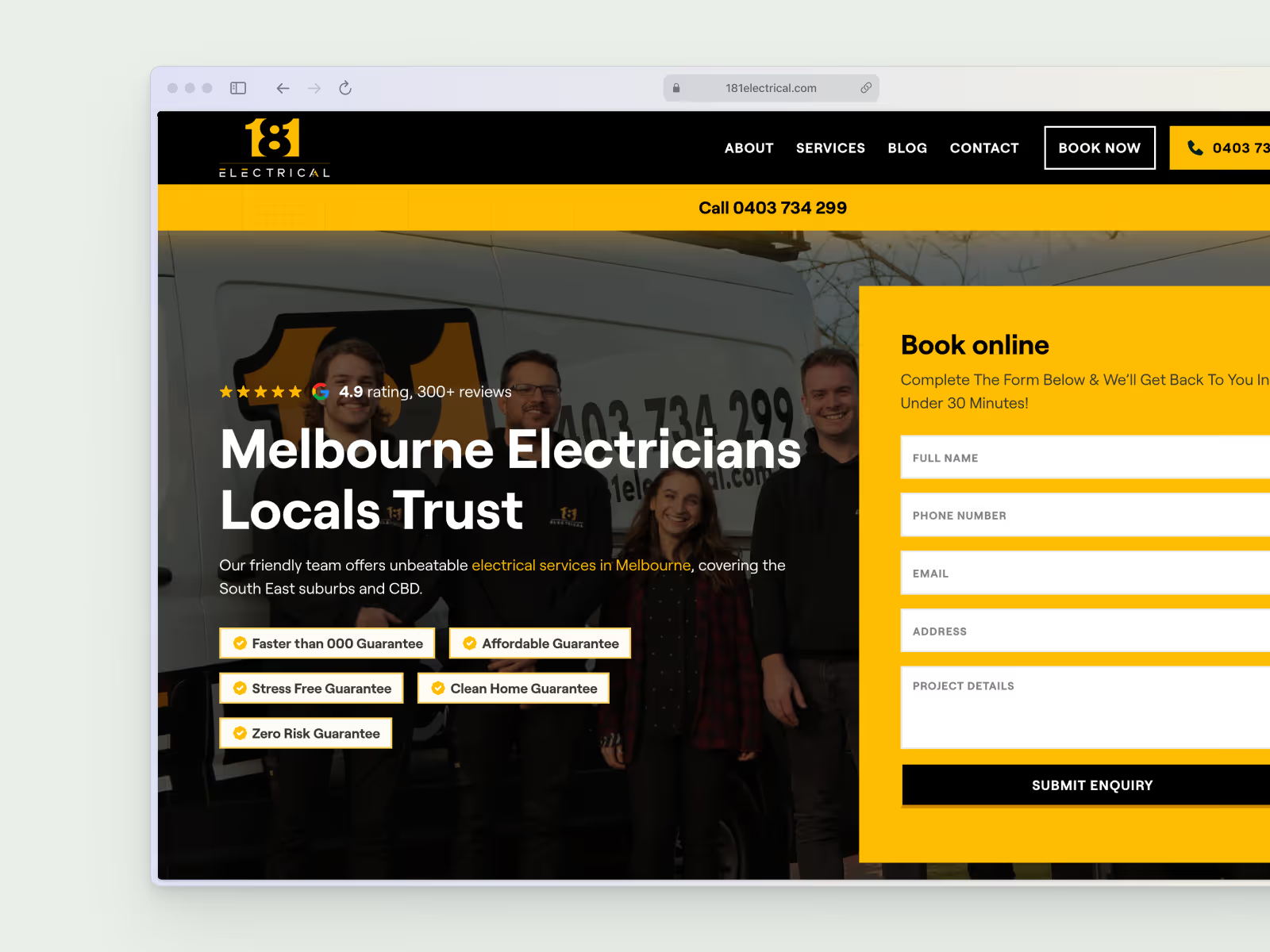
In industries where online marketing is important, businesses with higher quality websites often end up being the market leaders, despite having less effective operations. A prime example is service-based businesses like electricians – an electrical services firm with a high quality website can direct a huge number of new leads every month to their business.
By fixing up your website, you can position your business's unique strengths and reach customers that are looking for those unique strengths.
#8. Reducing buyer anxiety
Buyer anxiety is the hesitation, doubt, or unease a potential customer feels before making a purchase/enquiry, out of fear of making the wrong decision.
Think about the last time you made a big ticket purchase (car, home, new phone etc) and the amount of research you did beforehand. Did you get 'analysis paralysis'? Most people do!
Usually, to assuage these feelings, your potential customers are looking for more information about your products/services, so that they can check every box that needs checking in their purchasing journey.
The best websites present comprehensive information in logical user journeys, to guide their visitors towards the ultimate goal of becoming a customer.
#9. Higher perceived value
If your business provides a high quality service but your website looks like it was built in 2003, your customers' perception of your company's value will be diminished. This makes them much less likely to buy from you – they will instead search out competitors.
With a first-class website that truly matches the quality services your business provides, you can increase the perception of your business without actually changing your services themselves.
#10. Consistency across touchpoints
Most buying decisions don’t happen in a single moment. A potential customer might first see your business through an ad, hear about you via a referral, skim a proposal, and only then visit your website to make a judgment call.
When those touchpoints feel inconsistent (through different language, different promises or different levels of polish) it creates friction and doubt, even if the offering itself is strong.
A well-considered website acts as the anchor point that ties all those touchpoints together. Your website visitors will feel like they’re dealing with a coherent business. The result is less hesitation, fewer clarifying questions, and a smoother path from interest to enquiry.
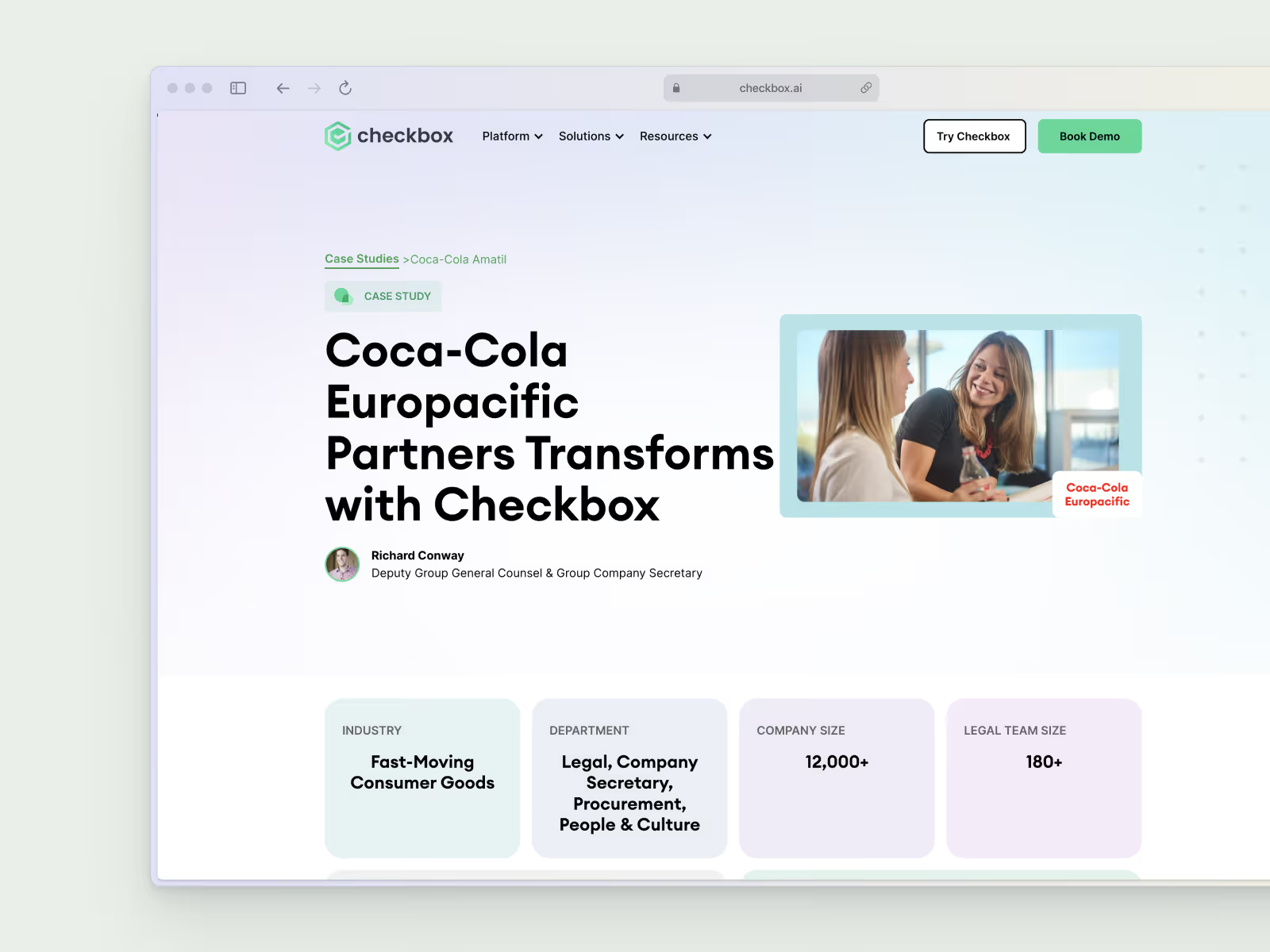
#11. Using case studies as sales tools
Case studies are one of the most powerful tools you can give a prospective buyer, especially when they are trying to assess risk.
A strong case study demonstrates that you’ve solved a similar problem for a similar type of client, and that the outcome was great. This allows your website visitors to mentally place themselves into the story and imagine a successful result before they ever speak to you.
Case studies can be shared in follow-up emails, referenced during calls, or discovered organically by prospects doing their own research.
#12. Up-to-date content and signals of activity
Have you ever gone to buy something from a business, only to see that their last post was 2 years ago? You probably wondered whether they still existed.
One of the fastest ways to lose trust online is to look inactive. Outdated content, old blog posts, expired announcements, or references to years gone by make visitors ask themselves: “Is this business still operating?”
Fresh, current content signals momentum. It shows that the business is operating, evolving, and paying attention to its market. Even small updates like recent blog posts and new case studies help show the business is alive and engaged.
Part 3: Better marketing performance
#13. Better performance from paid advertising
Sending traffic to a generic or outdated website often leads to wasted ad spend, regardless of how well the ads are written.
A high quality website helps paid traffic to land on pages designed specifically for the user's intent. Clear messaging, focused layouts, and strong calls to action help convert interest into enquiries instead of letting visitors drift away.
Over time, this dramatically improves return on ad spend.
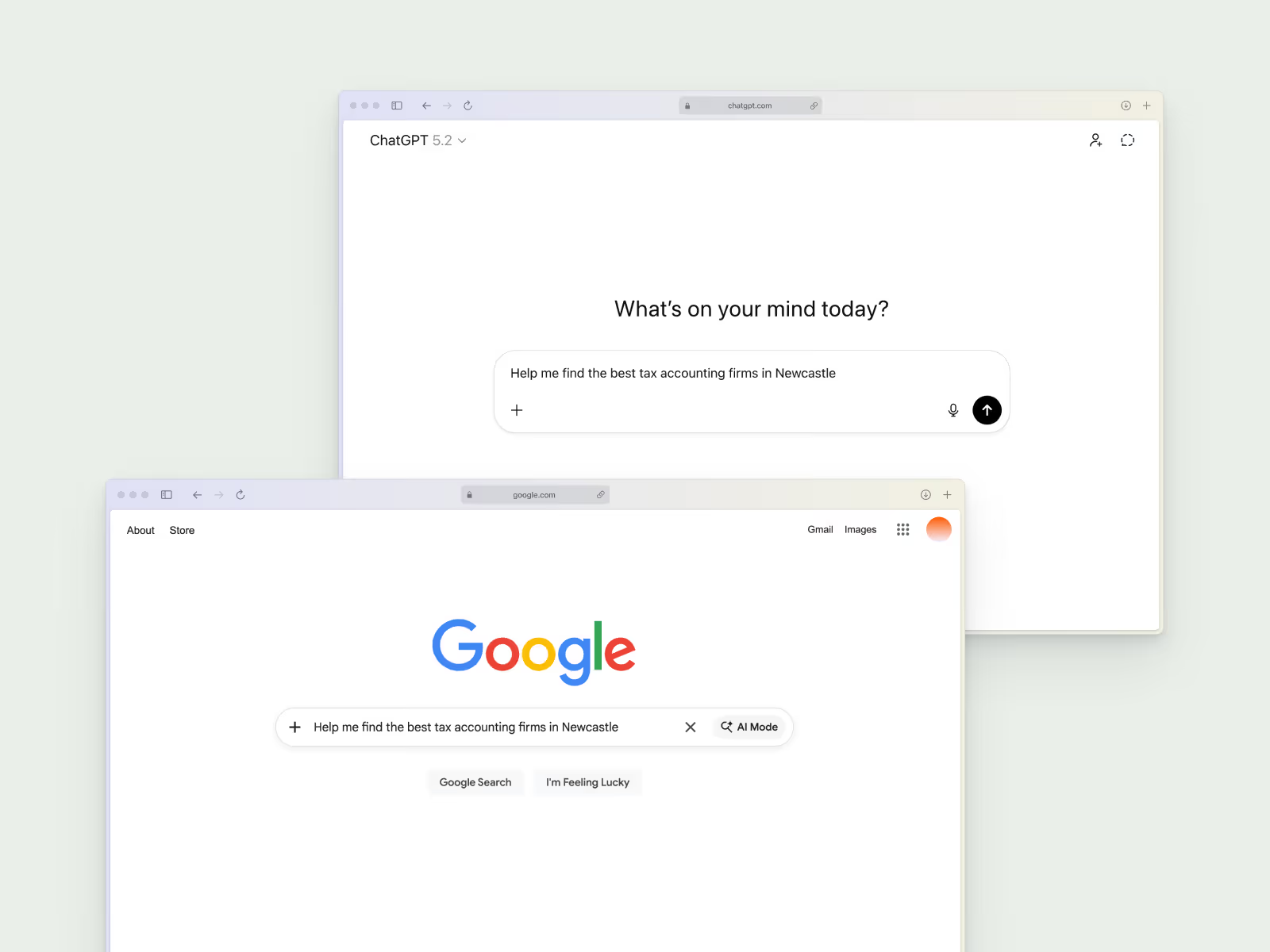
#14. SEO/AEO foundations that compound over time
Search visibility is usually built up over months and years. A well-structured website provides the technical and content foundations that allow search engine and answer engine performance to improve steadily.
By organising content clearly, using consistent language, and answering real customer questions, your website becomes easier for both search engines and AI-driven answer engines to understand.
This increases the likelihood that your business appears when prospects are actively looking for solutions like yours.
#15. Clear messaging for outbound and referral traffic
A prospect who has been referred to you or contacted directly usually wants quick confirmation that you’re credible and worth their time.
A clear, high quality website allows those prospects to self-qualify. It reinforces the message they’ve already heard and fills in the gaps without forcing a sales call too early.
The website does the heavy lifting before you ever speak to the prospect. By the time they reach out, they already understand your offering, making them more likely to convert.
#16. Improved analytics and decision-making
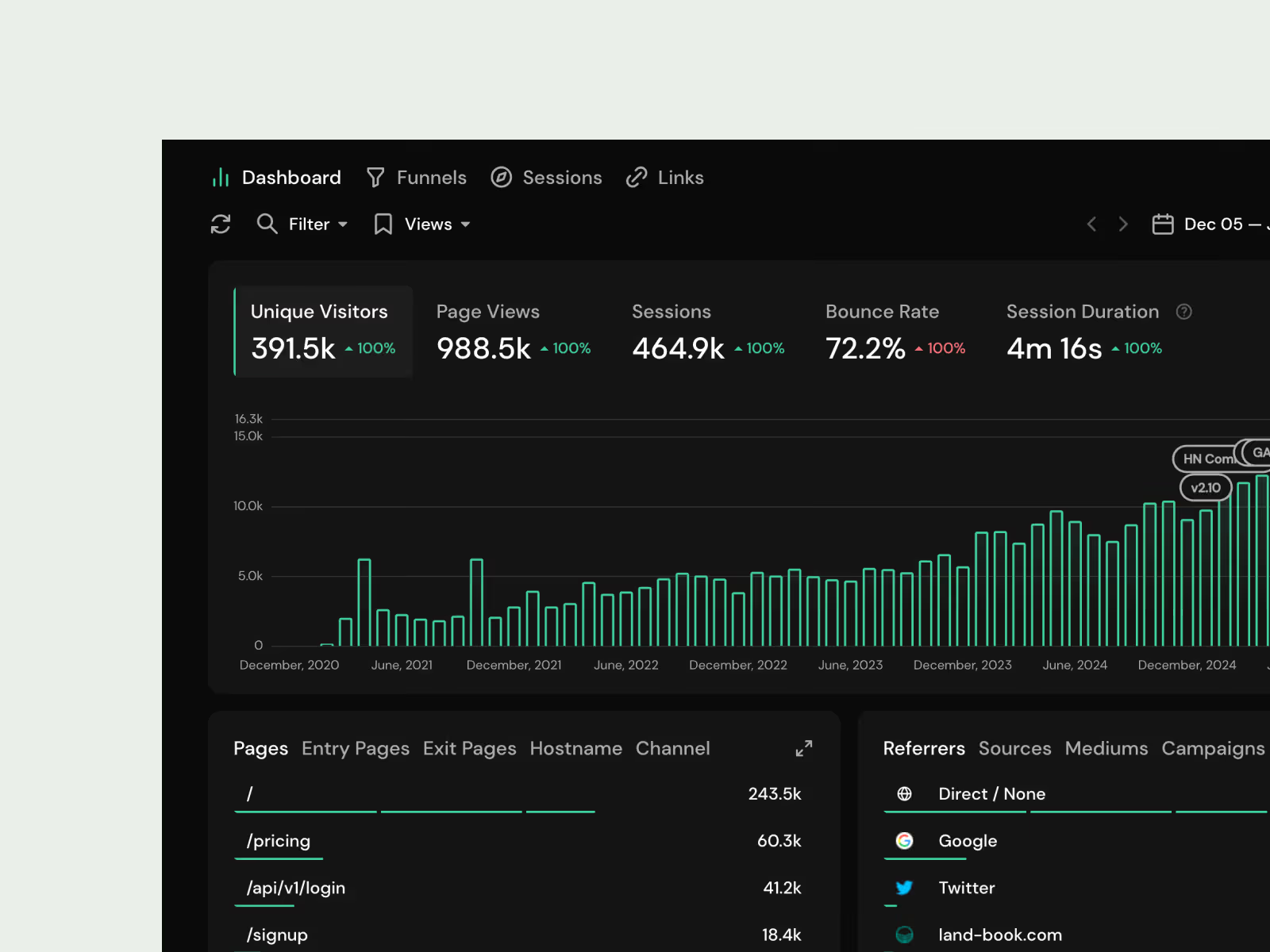
Many businesses make decisions based on instinct, anecdotal feedback, or incomplete data. They have blind spots around how customers actually interact with their website and don't truly know where opportunities are being lost.
A high quality website with integrated analytics allows you to see which pages are viewed, where users drop off, which pages drive enquiries, and how different traffic sources perform. Over time, this turns your website into a feedback loop rather than a static asset.
Part 4: More efficient operations
#17. Reduced time spent explaining your business
If you find yourself repeating the same explanations in sales calls, emails, and meetings, it’s often a sign that your website isn’t doing enough of the work.
A well-structured website clearly explains what you do, who it’s for, and how it works. It answers common questions upfront and frames your offering in a way that’s easy to understand without oversimplifying it. This saves you a ton of explaining to customers.
#18. Alignment across internal teams
When messaging lives in different places (sales decks, internal documents, old web pages etc) it’s easy for your different teams to drift out of alignment. This creates subtle inconsistencies that your customers notice.
A strong website acts as a single source of truth. It defines the language, positioning, and priorities of the business in a way that everyone can reference and rely on. This makes it easier for teams to stay consistent, even as the business grows.
#19. Easier customer support
A thoughtful website anticipates common questions and addresses them before they become support tickets. Clear explanations, structured content, and accessible resources reduce the need for customers to reach out to your team.
This improves efficiency and customers feel supported/informed. Your team will spend less time answering repetitive questions and more time solving meaningful problems.
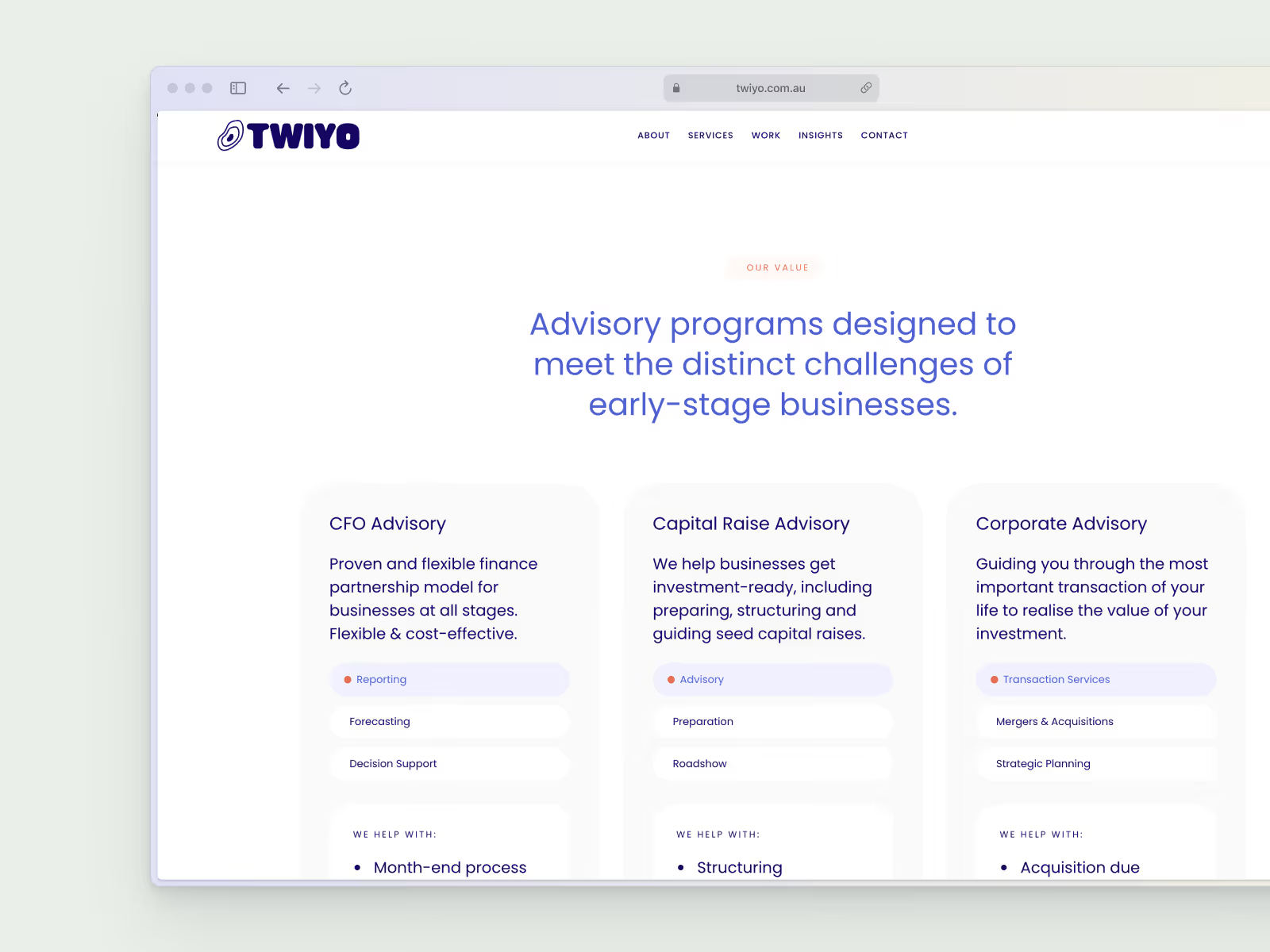
#20. Confidence in sending people to your site
Many businesses hesitate to share their website with potential customers, especially in early conversations. They know it doesn’t fully reflect the quality of their work or the way they actually operate.
With a high quality website, you can confidently include it in emails, proposals, outreach, and introductions, knowing it properly showcases your amazing business.
Part 5: Long term business value
#21. Future-proofing your digital presence
Websites that aren’t properly future-proofed require workarounds and full rebuilds when the business changes its services or team.
A future-proof website is structured to adapt, with modular layouts, CMS systems, and scalable architecture that make it easy to update content, add new services, and pivot direction without starting from scratch.
#22. Stronger brand memory and recall
Most visitors won’t convert on their first visit. What matters is whether they remember you when the time is right. Generic websites are easily forgotten, even if the service itself is solid.
A distinctive website creates a stronger mental imprint, giving your customers something to remember later when they’re ready to act.
#23. Less money spent on developers
Many businesses end up paying developers for tasks that shouldn’t require technical help, like simple text edits, adding new pages, or updating content. Over time, these small requests add up to a lot of money spent and time waiting.
A well-built website reduces this dependency. With a simple content editor and CMS (like Webflow's!), your team can make everyday updates themselves without worrying about breaking the site or waiting in a queue.
Developers are reserved for meaningful improvements, not minor adjustments.
The result is lower ongoing costs and greater autonomy.
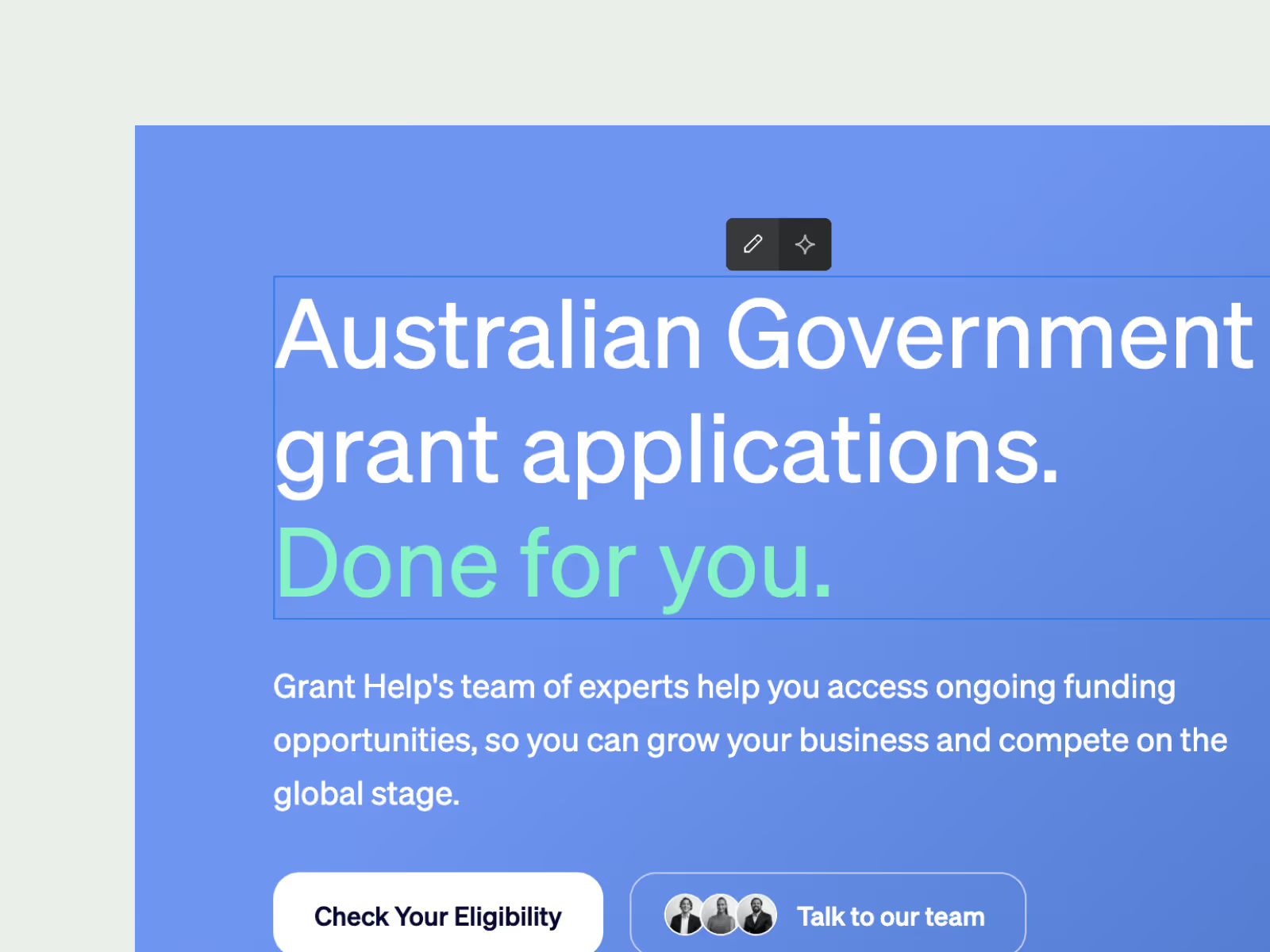
#24. A website that actually pays for itself
Websites are often seen as a cost rather than an investment, largely because their impact isn’t measured clearly.
A strategic website is built with return in mind. It generates leads, shortens sales cycles, reduces support load, and improves conversion rates across channels. These benefits compound quietly over time, helping the site pay for itself many times over.
#25. Easier onboarding of new staff and partners
As teams grow, onboarding becomes more complex. New staff and partners need context quickly: what the business does, how it positions itself, and what standards it holds.
A clear, well-articulated website provides that context immediately and helps new staff understand the business without relying solely on internal explanations or documents.
Conclusion
If you’re unsure whether your current website is helping or holding you back, get in touch with our team.
We'll have a chat about where your site is working well, where it could improve, and whether a rebuild would meaningfully support your business goals.

Keep reading
Free guides, news, case studies and more
Contact us

