Why high-performing businesses are switching to custom apps
[fs-toc-omit] Most businesses don’t set out to build complicated systems.
Complexity tends to creep in slowly. Extra spreadsheets, new software tools and temporary workarounds that your team starts to rely upon.
Over time, your business's previously manageable processes start to become fragile:
- Your important information lives in too many places
- Your simple tasks take longer than they should
- Each time your business grows new pressure is added.
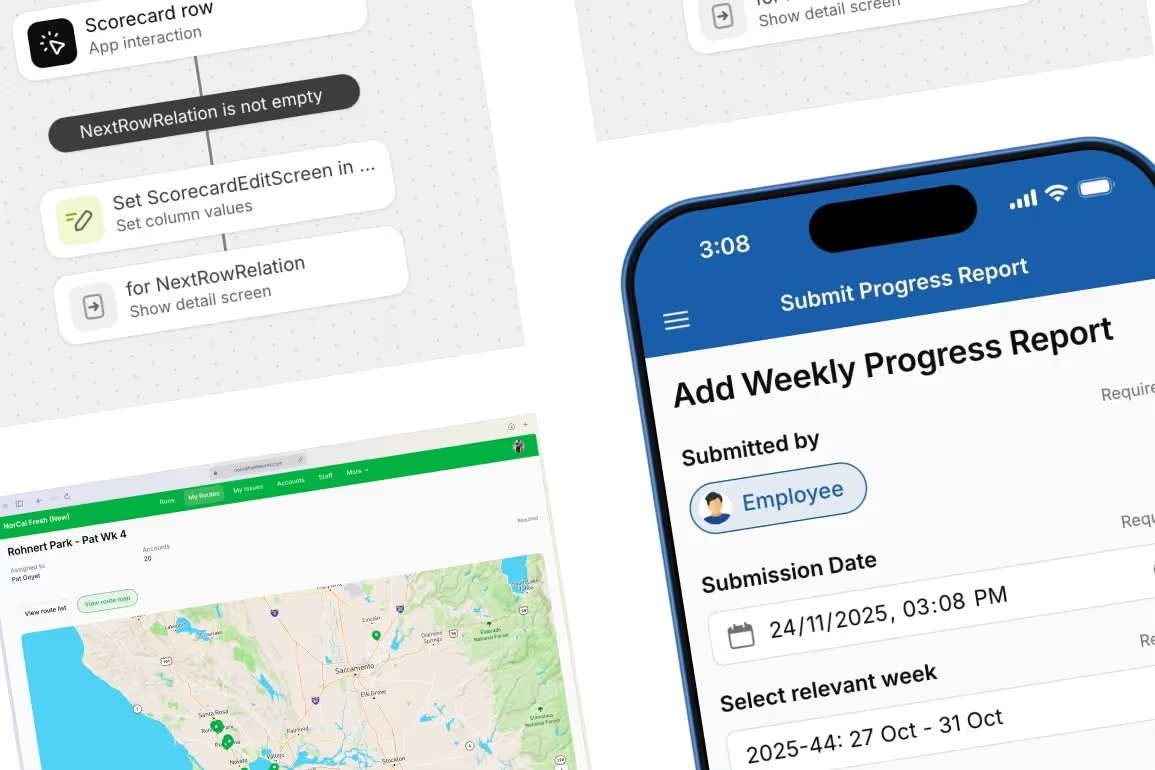
Luckily, there is a simple way to wrangle a lot of business problems and make life easier for your team: custom business apps that are built for your specific needs.
Let's see why a lot of high-performing businesses are ditching restrictive off-the-shelf software in favour of custom applications.
1. Custom apps are built around how your business actually works
Most off-the-shelf software forces your team to adapt their processes to fit the tool. Over time, this leads to awkward workarounds and “that’s just how we do it” moments that nobody feels good about. A complete waste of time.
A custom app is instead designed around your existing workflows, rules, and processes, rather than forcing you to compromise on how your business operates.
When an app reflects the real way your team works, it is much easier to use. Staff don't need to remember:
- Which Google Drive/Dropbox folder a specific form is in
- Where certain company data are stored
- Which processes to follow in certain circumstances
The app guides them through the correct processes by default, reducing friction and errors.
The result is software that feels less like an obligation and more like a natural extension of your business.
2. Custom apps improve team accountability and visibility
In many businesses, work gets done—but it’s not always clear who owns what, or where things are up to. This lack of visibility often leads to follow-ups, meetings, and duplicated effort.
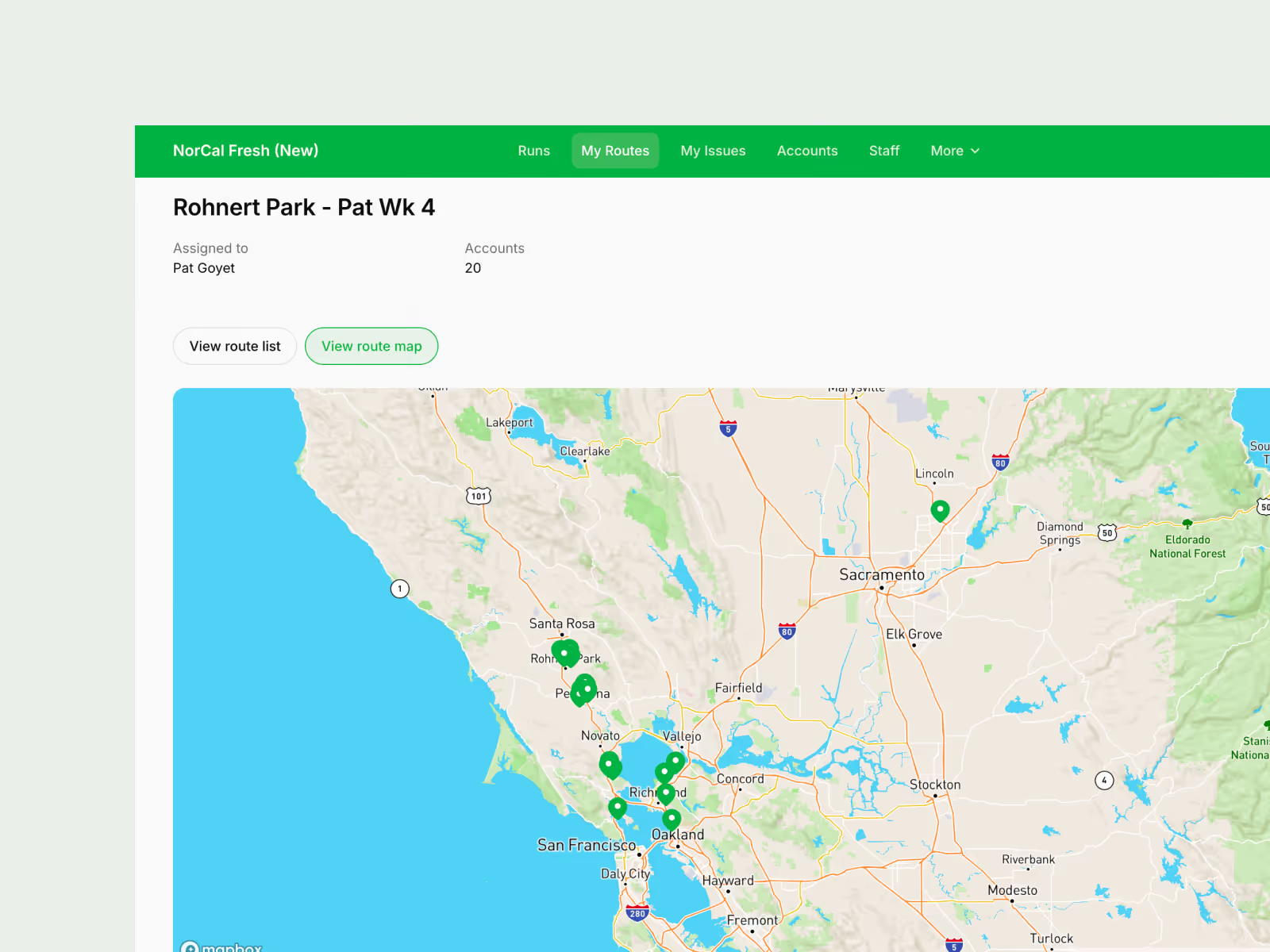
Custom apps can be designed to show responsibility and status clearly, reducing ambiguity and reliance on memory or informal communication.
A custom CRM app, for example, can have an audit trail built into it, where each action performed on a customer file is logged with the responsible team member's name and a timestamp.
The result is a calmer operating environment. Accountability becomes part of the system, there for everyone to see.
3. Custom apps scale with your business
Many businesses reach a point where their systems no longer match their size. What worked with three staff collapses under the weight of ten. At that stage, companies are often forced into expensive migrations or major process overhauls.
If you're using off-the-shelf software, it's nearly impossible to convince the company who made the software to implement a new feature that your business needs.
Custom apps, on the other hand, are built with evolution in mind. New features, workflows, and roles can be added incrementally as the business grows, without needing to replace the entire system.
4. Custom apps save you time every day
Small inefficiencies rarely feel urgent. Manually copying data, updating spreadsheets, chasing approvals, or double-entering information might only take a few minutes at a time. But repeated daily across a team, these minutes compound into a significant drain on time and energy.
Custom apps are particularly effective at removing low-level frictions:
- Manually copying data
- Updating spreadsheets
- Chasing approvals
- Double-entering information
These kind of annoying tasks take up tons of time for most businesses.
By automating routine tasks and centralising data, a custom app quietly saves time every day without requiring behavioural change from your team. Work simply flows faster.
5. Custom apps eliminate 'tool sprawl'
Many growing businesses slowly accumulate software.
- CRMs for project tracking
- Accounting software for business finances
- HR software for payroll
- And more...
Each tool solves a small problem, but together they create complexity, confusion, and ongoing cost.
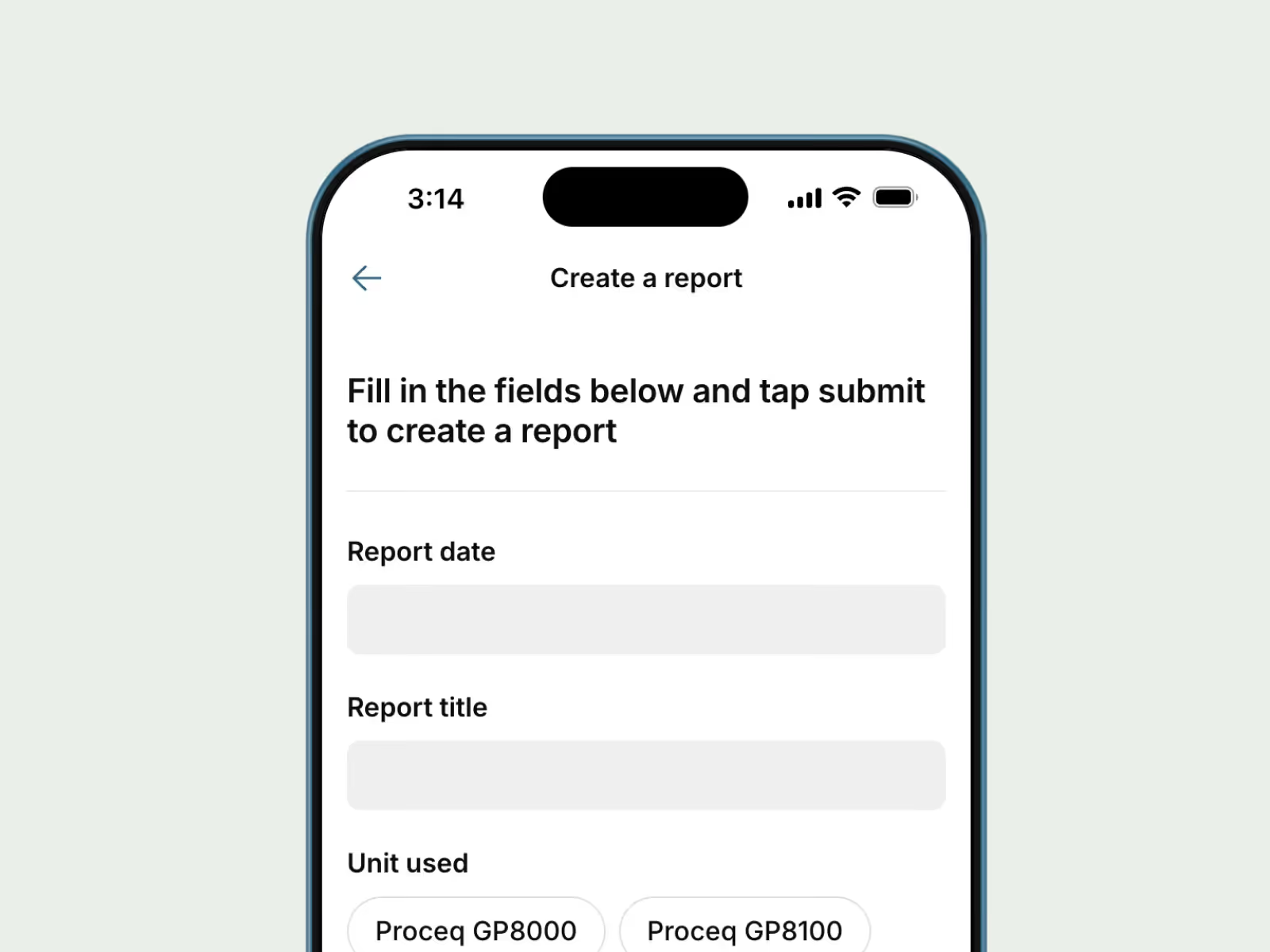
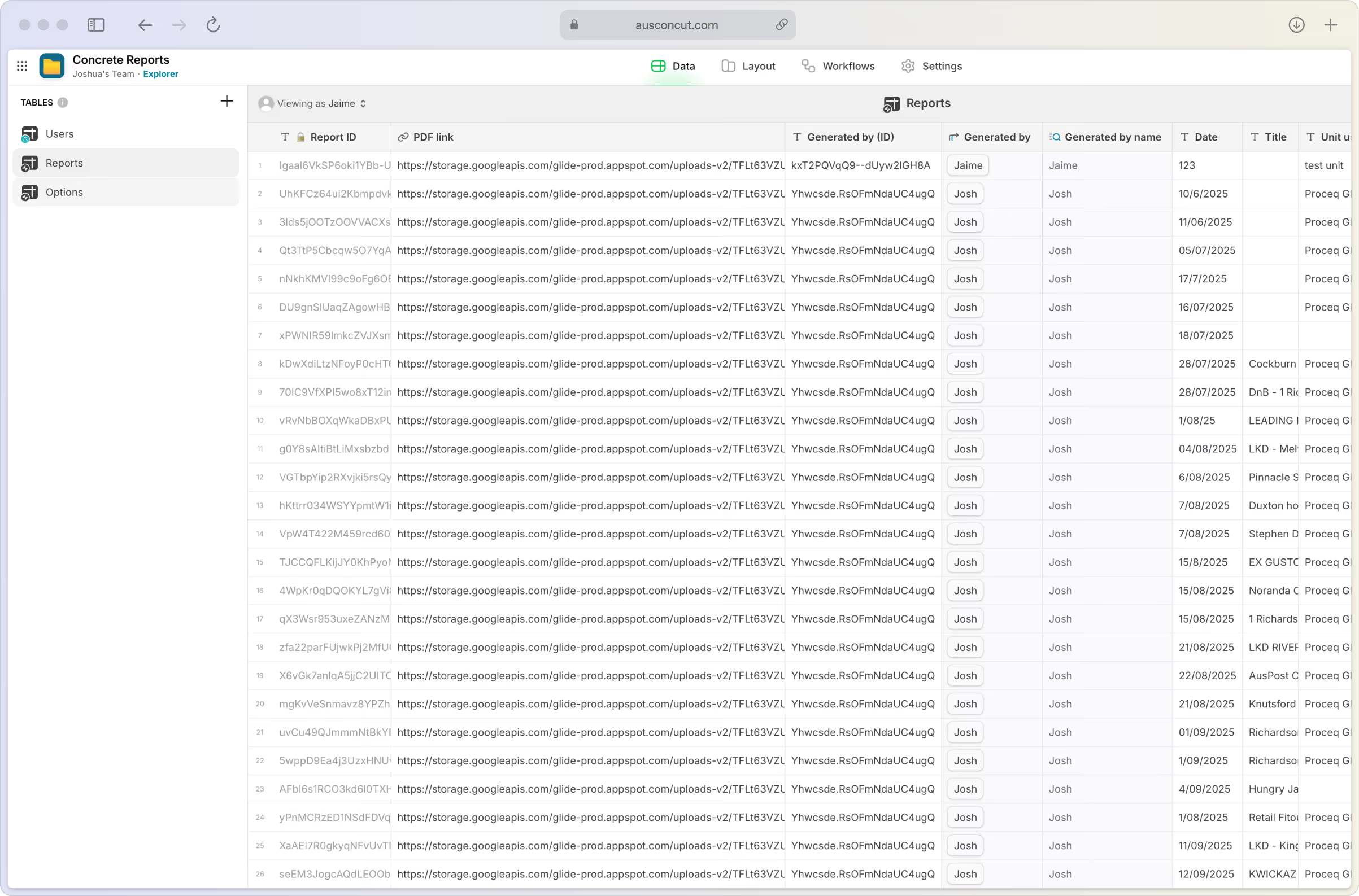
A custom app can consolidate multiple tools into a single system built around your core operations. Rather than stitching together logins, subscriptions, and integrations, your team works from one place that contains exactly what they need—and nothing they don’t.
6. Custom apps reduce onboarding time for new staff
Onboarding often relies heavily on informal knowledge transfer. New staff learn systems by shadowing others, asking questions, and slowly piecing together how things work. This process is time-consuming and inconsistent.
A custom app can encode your processes directly into the tools new hires use every day. The correct steps, data requirements, and workflows are built into the system, reducing reliance on staff knowledge.
This saves tons of time in the long run, and improves consistency across the team. New team members become experts very quickly.
7. Custom apps enable better decision-making with real data
Generic software tends to report on generic metrics, which often fail to reflect the numbers that actually matter in your business.
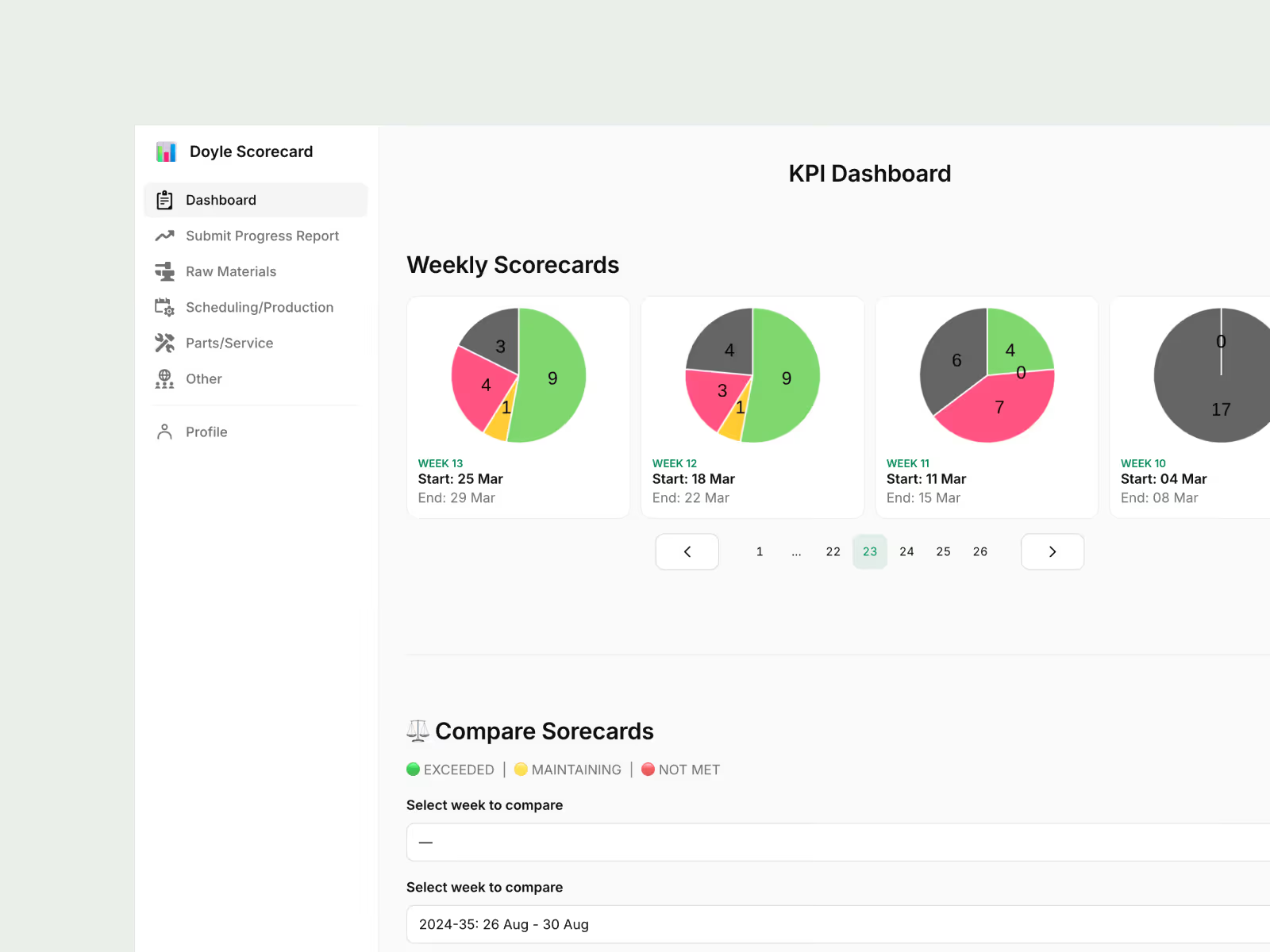
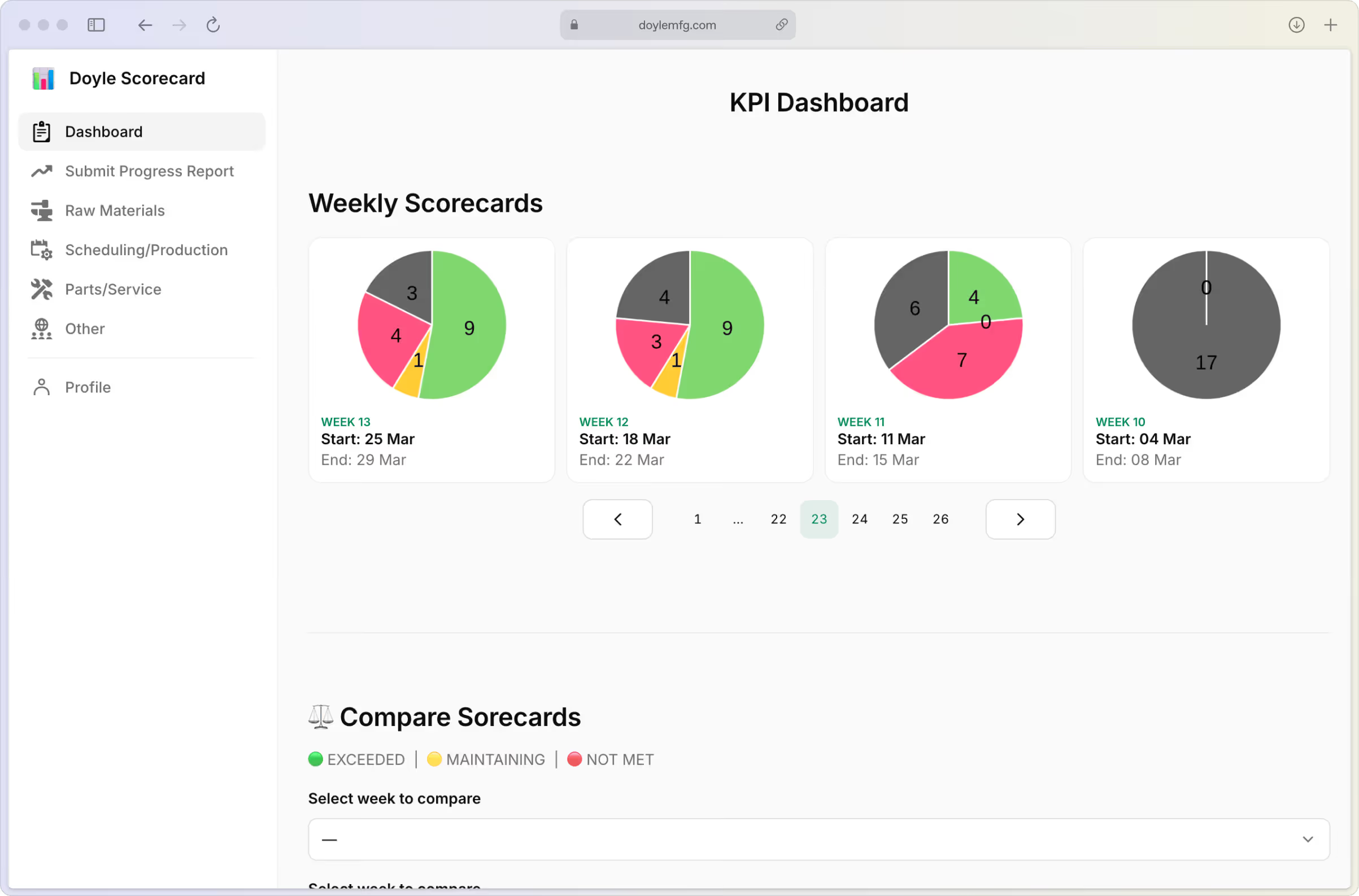
Custom apps allow you to define and track metrics that align with your specific goals and workflows. Dashboards and reports are built around the questions you need answered, not the defaults chosen by a software vendor.
This leads to more confident decision-making and relevant data.
8. Custom apps give you full ownership and control
With off-the-shelf software, you are always operating according to the software vendor's priorities. They might:
- Discontinue a feature your business relies upon
- Discontinue the entire software itself
- Sell the business to investors
- Jack up the pricing
- The list goes on...
A custom app gives you ownership over both functionality and direction. You decide what gets built, what stays simple, and when changes are made.
This control reduces long-term risk and as your business evolves, your systems can evolve on your terms.
9. Custom apps turn your operations into a competitive advantage
There are a lot of parts of your business that are generic and can be copied by competitors:
- Marketing messages can be copied.
- Pricing models can be matched.
- Team members can be poached.
Internal systems, and especially custom business apps, are far harder for competitors to replicate.
Over time, strong internal systems become a differentiator in their own right. They allow you to deliver better outcomes with less effort, reinforcing your position in the market.
----
If you’re curious whether a custom app could simplify your operations or replace parts of your current tool stack, get in touch with us. We’re happy to walk through your workflows, identify friction points, and help you understand what’s possible.
We needed a way for our team to easily track customer inspections from their mobile phone. Merino built us a powerful Glide app that all of our staff use. It's a huge time saver and has replaced all of our old spreadsheets.

Keep reading
Free guides, news, case studies and more
Contact us

